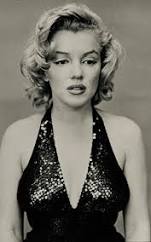
‘My photographs don’t go below the surface. They don’t go below anything. They’re readings of whats on the surface’ -Avedon
This was the end of the day, Avedon was packing up but then glimpsed Marilyn looking vulnerable with her guard down.He got this shot with the help of Marilyn who kept her expression long enough for him to shoot it.
Diane Arbus- gesture, expression and relationships
Susan Meiselas-snapshots of characters in maelstrom of life
Manuel Alvarez Bravo- captures cultural details
Annie Liebewitz
Roman Freeman
Julia Cameron
T
These show the marked difference between her photographs of men and of women. The man stares confrontationally and the woman is in profile with extended neck.The mans hair reflects his intellect.
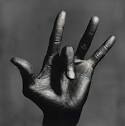
Irving Penn-uses his camera like a scalpel, said it was also a Stradivarius. Severe cropping increases his production of elegant well composed images
Miles Davis hand
Dana Lixenberg- ‘being photographic is nothing to do with looks’
Her subjects are not rich or thin but they emit something’ that goes way beyond the superficiality of…looks’. She spent years in a housing project called Imperial Courts where he shot with a full frame camera and tripod unlike the media who came in , shot quickly and left.The world saw this place fro the vantage point of a helicopter.
“I’m always wary of doing something too obvious when illustrating a person, like photographing a writer at his desk,” Lixenberg says. “When I start shooting I try to focus on the person and clear my head of the rest, no matter how famous they are. And in Imperial Courts, I’m just tuning into the person in front of me.”- Guardian
the portrait consists of tones, textures and body language- making her radiate something like light.
Alec Soth
“If in your heart you want to take pictures of kitties’ take pictures of kitties”
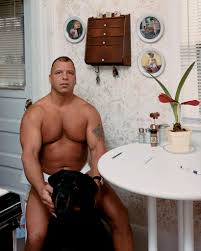
Soth likes the unfamiliar and strangers on his journeys.The picture Lenny doesn’t quite add up. He looks initially like a tough, body builder but is in fact an erotic masseur who Soth found via an advert.
There is a mismatch between his hard man looks and the delicacy and cheesiness of the plates on Walland the odd placement of the flowering indoor plant.
OLYMPUS DIGITAL CAMERAOLYMPUS DIGITAL CAMERAOLYMPUS DIGITAL CAMERAOLYMPUS DIGITAL CAMERAOLYMPUS DIGITAL CAMERAOLYMPUS DIGITAL CAMERAOLYMPUS DIGITAL CAMERAOLYMPUS DIGITAL CAMERAOLYMPUS DIGITAL CAMERA
Karl Blossfeldt 1865-1932
German photographer, teacher, sculptor. Close up photographs of plants and living things using home made camera capable of magnifying x30, self taught photographer, intrigued by the patterns and forms in nature.
Part 2 exercise 1- portrait against white wall
OLYMPUS DIGITAL CAMERAOLYMPUS DIGITAL CAMERAOLYMPUS DIGITAL CAMERAOLYMPUS DIGITAL CAMERA
q1: what does removing the signs of place do to the interpretation of the photographs?
It becomes necessary to look within the figure in order to draw conclusions about the individual e.g. the T-shirt is NIKE which has a particular meaning as a brand worn by teenagers. This suggests that the child is a teenager rather than a pre adolescent. The expressions on his face are very important as there is no background to show where he lives or where he is being photographed. He seems relaxed and having fun . We are able to infer that the photographer is known to him or is at least able to make him laugh, he must be a relaxed boy.As a series his facial expressions become very important as there is little else that changes in the subject or the background.
OLYMPUS DIGITAL CAMERA
q2:How does it emphasise shape and subject as a distinct object ?
The eye is drawn to the figure as it is a single figure on a plain white background.
Trish Murtha- a British social documentary photographer
In this portrait you can see a girl with a dirty face with a background of the city including terraced houses and a tower block. She is looking directly at the camera with a confrontational expression. The implication is that the background is her home environment- a built up working class part of the city.
This picture has a very strong composition. The man in the centre makes up the shape of a triangle and his pointed finger leads the viewer out of the frame to where the subject of his anger is found. The figure in the background looking towards the old man adds extra information as well as the turned head on the right. They both look serious and this increases the tension in the picture.
There is a great deal of added information for those who lived in this era. The man washing his beer bottles is doing so because he would then get money back for the bottles. This would help him to buy more as judging by the number of bottles he would seem to have a drink problem.The light coming though the window hits the bottles and highlights his face creating an almost religious
My first idea in creating a series of human traces was to take ghost like photographs of my feet. The idea came to me as I was looking at my feet resting on the side of a bench in my kitchen. I often sit on a comfortable chair here whilst my feet rest on the bench. I was trying to represent the fact that I rest there often by using long exposure to create partial images of my feet showing it was a place that often was ‘empty’ but also was a place I rested. I liked the results of my experiments but agreed with my tutor that perhaps this is not what was wanted in the brief. ( see human traces feet ).
My next idea was to photograph a 99 year old recipe book handwritten by my grandmother. The human traces within the book include her handwriting, the patina of age as family members turned the pages and the new cover my mother put on the book to give to me. My grandmother died when I was five so my memories of her are patchy but for some reason I always remembered her handwriting – so neat and calligraphic. My mother’s hand writing was very similar to her own mother’s so this book takes me back through the generations.
In photographing the book I wanted to show its age – it has browning pages and the spine is marked too.I used a shallow depth of field and placed the book in my own kitchen on the worktop. ( see human traces recipe book ).
I wasn’t sure at this point whether the recipe book was to be my project as re reading the brief graffiti and human traces in the outdoor was suggested . So I decided to explore graffiti a little and then choose my final pictures. Near my home there is a poly tunnel overpass and it has many graffiti tags on it. These are made quite beautiful because of the diffuse light coming through the tunnel roof creating glowing lettering. I used a fairly shallow depth of field to make the most of this light.( see human traces tunnel)
I took some shots too of graffiti on a local line of garages, this reminded me somewhat of the Becker photographs from the German school of photography. ( see garages). I liked the fact that there was graffiti on the outside the garages, some of which had been painted over ,and there were traces of human activity on the inside which were presumed but unknown.
I was recently visiting an end of year show in Brick Lane when I was drawn to the mosaic like graffiti on the walls. I took photos of the images that I was most drawn to and put them together in a grid. When I had made the grid it seemed to me it had iconic characteristics and that the graffiti artists were dealing with the issues of life and death, heaven and hell. ( see graffiti heaven and hell ).
Human traces in terms of rubbish left behind is an issue that has interested me for some time. The photographs of my local pond I took last year but I thought I would include them as they are part of my photographic journey. ( human traces -pond).
On reflection I think that my answer to the human traces brief is the recipe book as it is personal, contains multiple human traces and is a piece of family history.
The images for the development described are included in the blog under the title human traces.The images below are my choice of images from the recipe book.
OLYMPUS DIGITAL CAMERAOLYMPUS DIGITAL CAMERAOLYMPUS DIGITAL CAMERAOLYMPUS DIGITAL CAMERAOLYMPUS DIGITAL CAMERAOLYMPUS DIGITAL CAMERAOLYMPUS DIGITAL CAMERAOLYMPUS DIGITAL CAMERA
I was interested in the rubbish that people left in my local pond and took these photographs prior to starting this course. I liked the effect that the pond water had in creating a backdrop for the floating objects. I felt that the dark background allowed the rubbish to take on a rather beautiful effect and I enjoyed this irony. At the time of taking these there was a great deal in the news about plastic cups – coffee shops were beginning to promote non disposable cups and the excessive plastic bag rubbish that was being found all around the world was becoming an important environmental issue. The photo of the plastic cup with a split in it looks more like an ancient porcelain or metal one than plastic. The human traces dumped in the pond included drug bags, beer bottles and cans, receipts and miscellaneous items of small rubbish. The pond is meant to be a community asset and a thing of beauty . Ironically the actual pond itself is rather ugly and in my photographs the rubbish takes on an elegiac beauty.
Graffiti art has its origins in 1970s New York, when young people began to use spray paint and other materials to create images on buildings and on the sides of subway trains. Such graffiti can range from bright graphic images (wildstyle) to the stylised monogram (tag).
Graffiti as such is rarely seen in galleries and museums, yet its aesthetic has been incorporated into artists’ work. Early exponents of graffiti in art included the French artist Jean Dubuffet who incorporated tags and graphic motifs into his paintings, and the New York artists Jean-Michel Basquiat and Keith Haring who could be defined as street art pioneers.
More recently, graffiti artists such as Barry McGee and Banksy have had their work exhibited in commercial spaces. TATE website
OLYMPUS DIGITAL CAMERA
OLYMPUS DIGITAL CAMERA
OLYMPUS DIGITAL CAMERA
OLYMPUS DIGITAL CAMERA
OLYMPUS DIGITAL CAMERA
OLYMPUS DIGITAL CAMERA
OLYMPUS DIGITAL CAMERA
OLYMPUS DIGITAL CAMERA
OLYMPUS DIGITAL CAMERA
OLYMPUS DIGITAL CAMERA
OLYMPUS DIGITAL CAMERA
–
Near my home is a raised tunnel which is translucent plastic. The light comes through the tunnel in a diffuse and subtle way and means that the graffiti looks luminous and beautiful.
These garages are at the top of my road but it was only the other day that I really noticed them.I noticed the graffiti on the garage doors which is 1 level of traces and on a second level the garages contain things which are valuable to the humans who own them.
My grandmother went to cookery classes when she was young and wrote them down in a book in her beautiful handwriting without a single crossing out. The human traces represented in the book are those of my grandmother, and the patina and slight damage was made by her continued touch and that of other family members. Some extra recipes were added by my mother at the back.When I mentioned to my mother that I loved the book she then got it recovered not realising that I wanted the hundred year old cover as well as the contents. My mother died soon after she gave me the book so the traces of my mother and grandmother in this book are powerful. Next year this family book will be 100 years old and hopefully it will pass down the generations.
The power of handwriting has long been something I appreciate. As a GP there were many years before computerisation when you read a patients notes and could tell immediately who had seen them before you and as well it was possible to glean the other doctor’s mood at that time. Changing to computer records was a real loss in that sense.
The Art of Handwriting
Writing a letter in one’s own hand can be an artistic act. Handwriting animates paper. The bold flairs of calligraphic script shout for attention, while elegant flourishes of cursive sashay across the page. Free-spirited scribbled letters trip over each other, and distinctive dashes help direct traffic. Some crossed t’s and dotted i’s stand alert, and others slump or sway into their neighbors. Every message brims with the personality of the writer at the moment of interplay between hand, eye, mind, pen, and paper.
We were all taught to write in a specific way when we were children at school, but it is evident that no one continues to write exactly the way they were taught and everyone’s handwriting looks different. In fact as soon as someone can write, he or she gradually alters the shapes and sizes of letters in accordance with individual likes and dislikes.
WHY IS THIS?
The reason is that our personalities affect the way our handwriting develops after we were taught to write. This is because handwriting is the pattern of our psychology expressed in symbols on the page and these symbols are as unique as our own DNA.
When you get to know a person’s handwriting well enough, you recognise whose script it is, just as if it were a well-known painting or photograph. Graphology is based on the principle that every individual’s handwriting has a character of its own and this is entirely due to the uniqueness of the writer’s personality.
So it is the writer’s deviations from the copybook learnt that allows expert graphologists to assess, with the greatest accuracy, the character and capabilities of the writer.
In fact graphologists are exceptionally fortunate in that they see before them, in black and white, the pattern in symbolic form of a writer’s whole psychological profile. By contrast, psychoanalysts and psychotherapists all over the world must formulate their own opinions solely on the basis of what is told to them over a period of time by the client in question.
I produced this grid of photographs from a graffiti wall in Brick Lane which made me think of heaven and hell. Man made hell is represented by the photographs I chose to place in the lower quarter, the earth is represented in the second and third quarters .The top quarter represents heaven containing children, love and madonna.I didnt have my usual camera with me so I used the i phone x.
Tags in the overpass
OLYMPUS DIGITAL CAMERA
OLYMPUS DIGITAL CAMERA
OLYMPUS DIGITAL CAMERA
OLYMPUS DIGITAL CAMERA
OLYMPUS DIGITAL CAMERA
OLYMPUS DIGITAL CAMERA
OLYMPUS DIGITAL CAMERA
OLYMPUS DIGITAL CAMERA
These photo of graffiti represent the individual producing their tag and hence are more personal than the graffiti on the Brick lane wall . They are sprayed onto a covered walkway near my home . The walk way is made of a translucent plastic substance which allows light to pass through which makes them glow and also allows the plant/ weeds growing outside the plastic to create silhouettes.
OLYMPUS DIGITAL CAMERA
OLYMPUS DIGITAL CAMERA
OLYMPUS DIGITAL CAMERA
OLYMPUS DIGITAL CAMERA
OLYMPUS DIGITAL CAMERA
OLYMPUS DIGITAL CAMERA
OLYMPUS DIGITAL CAMERA
This series of garage doors is a couple of hundred metres from my home. I was led to look at them by the graffiti on the wall next to the garages. They made me think of human traces because of the knowledge that the contain secret humans’property and also there are some subtle graffiti/patina from pain and locks on the outside. I considered taking these again using measuring tape and tripod so as to get a series ( ref Becker)








 Mary Davies